Closing the Ocean Intelligence Gap
Why biodiversity observation is now a strategic imperative in the UK
As Chief Executive of the Marine Biological Association, and custodian of more than a century of globally significant marine biodiversity records, I see unequivocally that the ocean biodiversity crisis is accelerating faster than our ability to observe, understand and forecast it. This is no longer an abstract environmental concern. It is a direct threat to food security, climate resilience and the UK’s stewardship obligations as an island nation.
The fundamental problem we face is not a lack of scientific insight, but a failure of visibility. Unlike the atmosphere - where continuous observation underpins weather forecasting - marine life is still sampled sporadically and unevenly. Across vast areas and critical timescales, we remain effectively blind to biological change just as pressures intensify.
Why the Data Gap Matters
Ocean biodiversity underpins national security, food supply, climate regulation and the growth of the blue economy. Yet as climate change, exploitation and pollution converge, the UK lacks persistent, scalable biological intelligence to support timely decision making.
We are attempting to manage a rapidly changing marine biosphere with tools that are fragmentary, slow and fundamentally inadequate for the pace and scale of change. This constrains effective ecosystem based management, undermines delivery of Biodiversity Beyond National Jurisdiction (BBNJ) commitments, and leaves the UK strategically exposed.
Autonomous Observation: A Critical Capability Shift
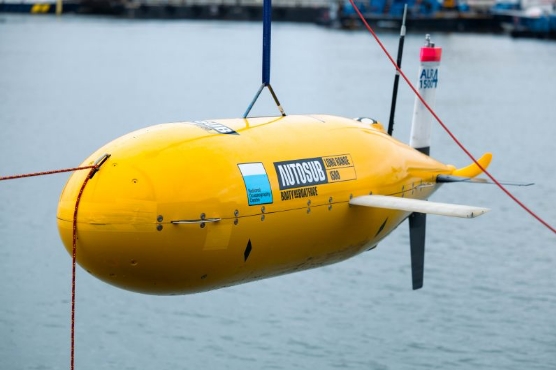
Autonomous biodiversity sensing at scale now offers a credible way forward. Advances in robotics, long duration platforms, molecular and genomic sensing and data analytics make it possible to build a biodiversity “forecasting system” for the ocean - moving from retrospective analysis to predictive capability.
This is not simply a scientific upgrade. It represents a step change in national infrastructure: a sovereign capability to observe, forecast and manage ocean life continuously, at scale and in near real time.
A Strategic Investment for a Decisive Decade
We are entering a decisive decade for the ocean. Investing now in autonomous biodiversity observation would position the UK as a global leader in BBNJ implementation, climate adaptation and marine research infrastructure. It would enable better policy, unlock innovation in high value technologies and secure long term economic and environmental resilience.
The choice is clear. We can continue to manage the ocean with partial sight, reacting late to crises we did not see coming. Or we can invest in the systems that give us strategic visibility of ocean life - ensuring the UK shapes the future of ocean stewardship rather than responding to its consequences.