Navigating Risk
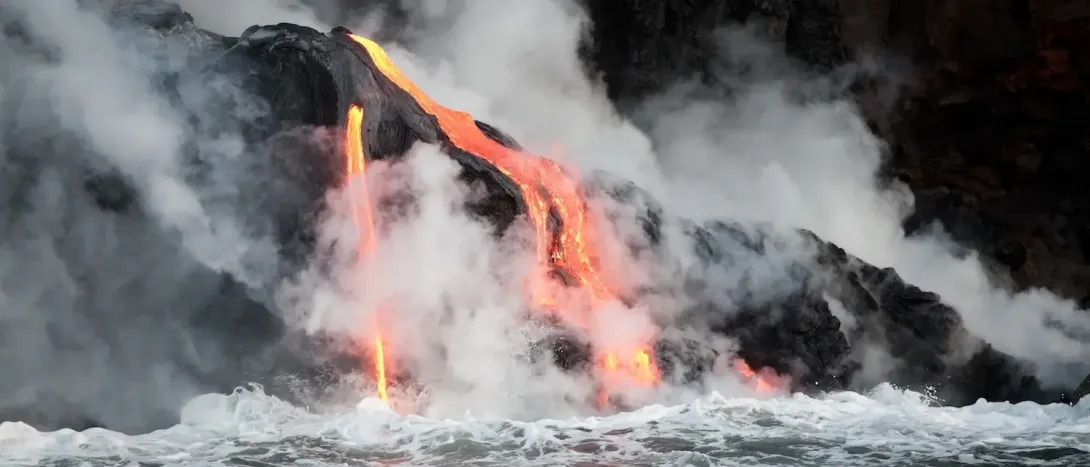
Around the world, communities face threats from hazards such as extreme weather, earthquakes, tsunamis, volcanic eruptions and flooding, many amplified by climate change. Marine science is central to building resilience through advanced monitoring, reconstructions of past events, and improved modelling of complex hazards. It underpins the design of coastal infrastructure and hazard management strategies for future conditions, and as a maritime nation, coastal infrastructure is of key importance to the UK economy. Meeting these challenges requires investment in marine research infrastructure, international collaboration, and technological innovation. By leading globally in hazard and extreme events research, the UK can strengthen resilience at home while forging partnerships that address shared risks on a worldwide scale.
The UK is a global leader in marine hazard and extreme event research, underpinned by world-class infrastructure and observatories. Research spans the impacts of human infrastructure on ecosystems, spatial planning, climate and ocean forecasting, and (sub)seafloor mapping to predict earthquakes, volcanic eruptions, tsunamis, and risks to critical infrastructure such as communication cables. Machine learning and digital twinning enhance this data-intensive science, while sustained observatories feed meteorological models. With major investments in computing and modelling, the UK is going beyond just defining hazards to enabling solutions, and leading in forecasting, mitigation, and resilience.
To enable the UK to remain at the forefront of hazards and extreme events research in the future requires a combination of sustained and individual experimental data acquisition, as well as the potential to install infrastructure then communicate data in real time to land. The diversity of hazards in the ocean requires diverse measurements on variable time and spatial scales, as well as bespoke platforms for data sharing and modelling future hazard scenarios. A robust and forward-looking observational infrastructure must integrate geophysical, geological, oceanographic and ecological data to support early warning, hazard characterisation and assessment, impact forecasting and risk informed decision making.
Dr Yeo is a Chapter Author for FMRI's report: ‘A UK Science Requirements Framework for Future Marine Research Infrastructure’. Developed through extensive consultation with the UK ocean science community, the SRF defines the outcomes and infrastructure needed to enable world-class marine science. It sets out a clear, evidence-based foundation to guide future investment - supporting the research essential to addressing some of the most urgent challenges facing our ocean.
Chapter: 'Strengthening resilience to natural hazards and extreme events.'